
Some key takeaways:
• UX is about aligning user needs with business goals
• Great UX professionals learn to speak the language of business
• There is no substitute for talking to real users and understanding human behavior
• UX job markets go through cycles, but organizations will always need great experiences
• Researchers should showcase their process, not just polished designs, in portfolios
• Volunteering with nonprofits is a great way to build experience and create impact
• Networking and getting involved in the UX community can open career opportunities
Transcript
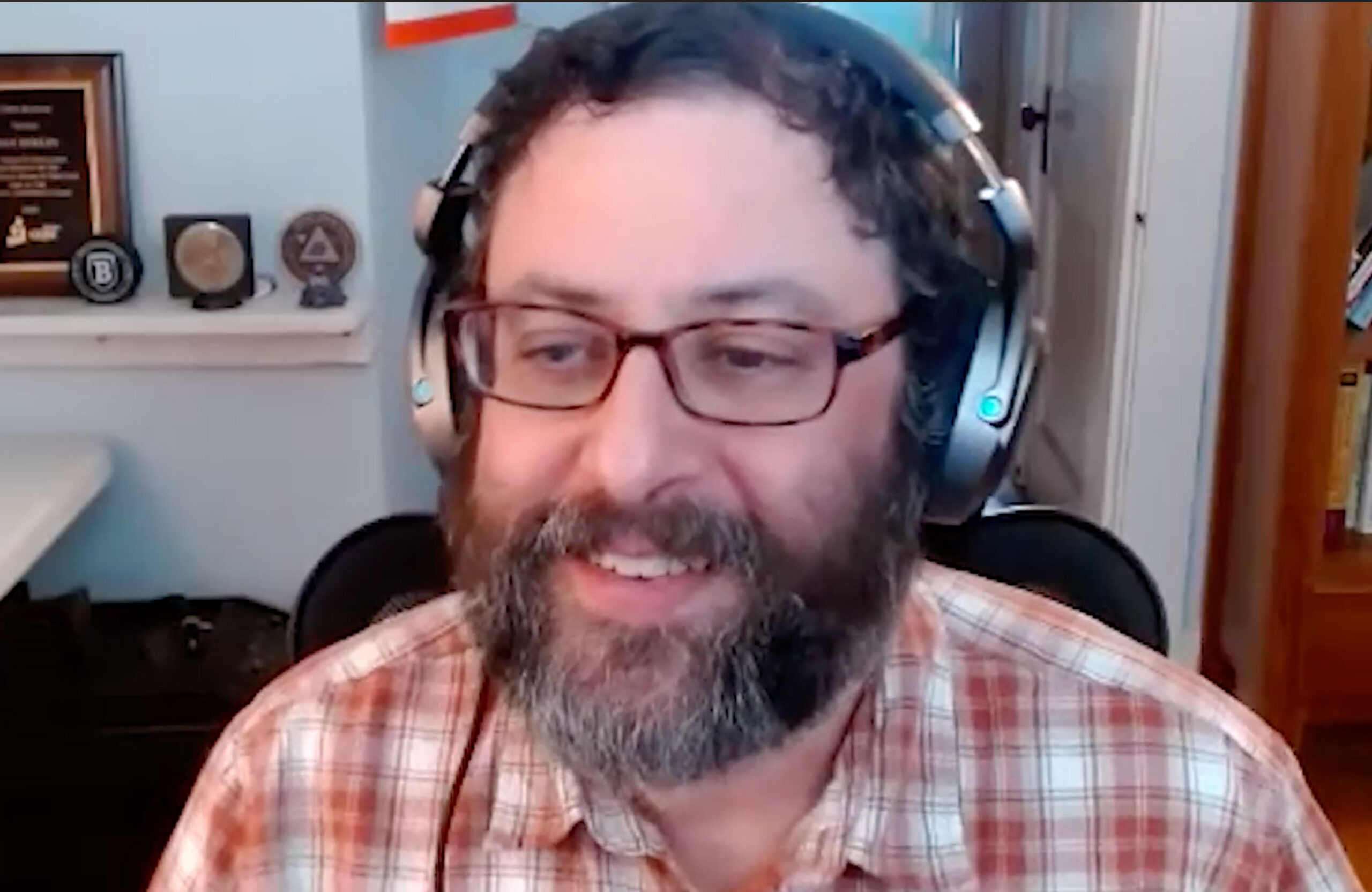
(0:00:08) Welcome to another episode of UX Pathways, and I have the honor of being joined today by Mr. Dan Berlin. Dan, how are you?
I’m doing great. Thanks for having me today.
Oh, glad to have you. I’m so glad to have you here because your teaching and being part of your classes in the past has really inspired me and left me with a lot of great advice. I was excited to have you on the podcast to share your story and your path. You’ve had a very impressive career. Can you tell me about your current role and describe your journey?
(0:00:46) Yeah, thanks for that. I’m currently an independent researcher based outside of Boston. I’ve been doing this for five years, running Watch City Research. My career started back in the tech support days. I graduated with a degree in psychology and wasn’t sure what to do with it, so I went into tech support.
One day, I participated in a usability study, and I realized it was this beautiful blend of computer geekery and psychology. I thought, “This is for me.” The Bentley University Design and Usability Center conducted the study at the company where I worked. After that experience, I quit my job and went to Bentley for two and a half years to earn an MBA and an MS in Human Factors Information Design.
(0:01:45) After that, I spent my UX career working in agencies. I’ve actually never worked in-house except for consulting gigs. I love agency life because of the variety — working across domains, hearing different problems, and applying solutions from one industry to another. That’s what really drives me.
Five years ago, I started Watch City Research. Now I’m also pursuing a PhD in business with a focus on experience design. I’m hoping to transition into academia while still keeping one foot in industry. I think UX education really benefits from combining academic theory with what’s actually happening in the field so students can learn from real-world examples.
(0:03:02) Yeah, I love that. You talked about your “aha” moment as a participant in a usability study, and I can relate because I also started at an agency. That consultant mindset never really leaves you. I think that perspective is important.
Now you’re moving toward academia, and UX really transcends all of those areas. A lot of people wonder if UX is the right path for them. You definitely have a great story there.
Could you define user experience? Everyone seems to have their own angle on what it means. Why do you think it’s important?
(0:03:31) When I first graduated, usability — as we called it back then — felt very narrow. I focused mostly on interfaces, clicking, and design elements. But a few years later, working with people at the agency, I discovered service design and realized how intertwined it is with UX.
We’re trying to provide a service to users, customers, or employees, and the way that service is designed impacts every interface, whether digital or physical.
(0:04:28) Today, I define user experience at a higher level. It’s about delivering a service that aligns with user expectations while also meeting business goals. Whether you’re a nonprofit or a for-profit organization, there are always two sides: user needs and stakeholder needs. UX is about aligning both.
That’s why UX professionals need a seat at the strategic table. UX is inherently strategic. We look at business goals and KPIs and make sure they align with what users actually need. When there isn’t alignment, usability breaks down, expectations fail, and users become frustrated and leave.
(0:06:18) I define UX as aligning stakeholder goals with user needs.
Yeah, and it’s that constant balance. I love that you mentioned service design and understanding the end-to-end experience. That’s really where UX evolved over time. Even with new technologies emerging, the core idea is still understanding how everything works together.
You’ve talked about your journey and adapting through different stages of your career. Is there some kind of mindset or mantra you use to adapt to change?
(0:07:04) There are really two things. First, it comes back to stakeholders. You have to understand their goals because every company operates differently. Beyond business goals, you need to understand how people work within the organization.
That ties back to service design. We need to think like service designers ourselves and understand what product managers, developers, and engineers need so UX work fits into the organization smoothly. UX professionals are often seen as disruptors, but we should focus more on facilitating than disrupting.
(0:08:53) My personal mantra is: “See a need, fill it.” UX professionals uncover needs everywhere — user needs, stakeholder needs, organizational needs. When we identify those needs, we have opportunities to solve problems in ways that help both users and businesses succeed.
(0:10:05) One thing I love about consulting is understanding how businesses actually operate. Good UX work isn’t about handing over a disruptive checklist. It’s about delivering actionable insights that help organizations move forward realistically.
(0:10:35) That focus on understanding business operations is something I hear often on this podcast. UX methodologies matter, but understanding the business language is critical.
This brings me to another question. There’s always hype around new technologies. Is there something happening right now in UX that people shouldn’t ignore?
(0:11:30) The obvious answer is AI, but honestly, I’m not the right person to speak deeply on that topic. I use AI in my work, but others are more immersed in it.
What I do think people shouldn’t ignore is the cyclical rise and fall of UX within organizations. I’ve seen companies build robust UX departments, eliminate them, then realize later they need UX again and rehire. Those waves happen repeatedly.
(0:13:02) Right now, we’re in one of those low periods where there are layoffs and many people searching for UX jobs. But I believe it’s temporary. Companies will realize they still need UX experts because technology alone doesn’t create great experiences.
We understand psychology, design principles, and human behavior. There’s no substitute for talking to real people, asking why, and uncovering root causes. That’s how we design meaningful experiences.
(0:15:00) So for people struggling in the UX job market right now, my advice is to hang in there. Organizations will continue to need design, research, content strategy, and service design expertise. Hopefully, that also leads to UX professionals getting a stronger seat at the strategic table.
(0:15:23) Great observation. We’ve seen waves like this before. Technology keeps getting more complex, and companies still need great user experiences to succeed.
(0:16:14) Exactly. I also think UX is moving closer to product management, and I think that’s a good thing. UX professionals don’t always need the title of UX Designer or UX Researcher. We can bring UX thinking into product management and other strategic roles. That may ultimately be how UX secures a stronger seat at the table.
(0:17:21) A lot of people are looking for career advice right now. What guidance would you give someone pursuing a UX path?
(0:17:50) Two things come to mind. First, learn to speak the language of business. UX professionals often get caught up in design terminology, but stakeholders care about business impact. You need to explain how your work moves the needle.
Think about the dashboard a CEO is looking at. How does your UX work positively affect those metrics? If you can connect your work to business outcomes, you’ll have much more influence.
(0:19:10) For researchers specifically, portfolios don’t always need polished designs. Show your process instead. Show your screeners, interview guides, notes, and reports. Demonstrate how you conduct smooth, effective research and how your insights helped solve real problems.
If confidentiality is an issue, black out sensitive information. Another great option is volunteering with nonprofits. Run a study for them, improve their experience, and use that work in your portfolio.
(0:20:40) Tell the story. Show how you understood stakeholder needs, approached the research, and delivered outcomes that moved the organization forward. That storytelling is powerful for hiring managers.
(0:21:25) Great advice. I especially appreciate the nonprofit recommendation because many nonprofits could benefit from UX help but don’t have the budget for it. Volunteering creates value for both sides.
Another important piece is getting involved in the UX community.
(0:22:00) Absolutely. The UX community is incredibly supportive. Conferences, meetups, volunteering, and speaking are some of the best ways to grow your career. Every job I’ve had came through networking.
It’s not just about what you know — it’s also about who you know. The more you get involved, the more opportunities you create for yourself.
(0:22:30) Some great advice there. Dan, thank you so much for being on the podcast. Is there a way people can contact you?
(0:22:57) Absolutely. You can reach me at Watch City Research or email me at dan@watchcityresearch.com. I love talking about UX and would be happy to connect with people about UX research or consulting opportunities.
Sounds great. Thanks again for being on the podcast.
Thank you for having me, Marc.
You’re welcome.
Leave a Reply