
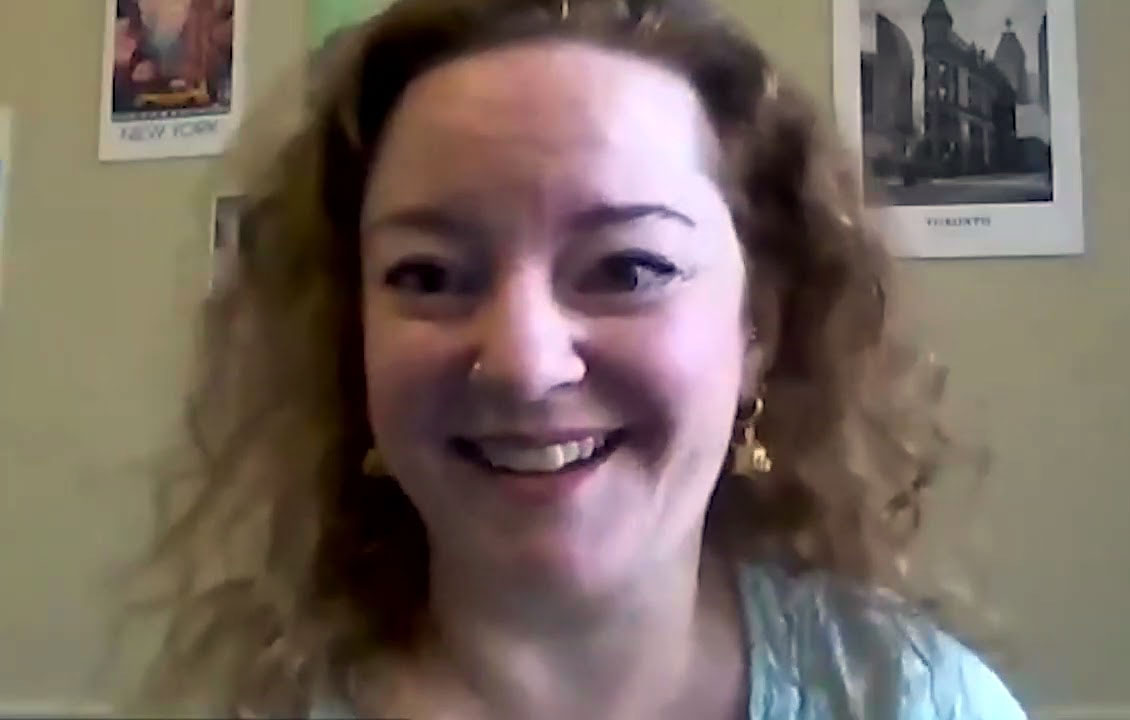
Discover the unique user experience path that Rachel E. Blackburn, Senior Learning & Enablement Consultant at User Testing, followed in this fourth episode of Season 4.
Main points:
1. UX is every interaction, not just screens
2. There is no single path into UX – diverse backgrounds are valuable
3. Your past experience equals transferable skills
4. Research reduces uncertainty to learn just enough to move forward
5. Small UX changes can have real-world impact
6. Don’t assume and always test
7. Stop pigeonholing yourself, and you’re more than your job title
8. AI is a tool, not a replacement for human creativity and judgment
9. Great UX is rooted in empathy and understanding people
10. Thoughtfulness matters, and consider emotional and edge-case scenarios
11. Imposter syndrome is normal, and you’re likely more qualified than you think
Transcript
Marc:
Hi, everyone. Welcome to an episode of UX Pathways. I have the honor of being joined by Rachel Blackburn. Rachel, how are you?
Rachel:
I’m great. How are you?
Marc:
I’m great too. We’ve been chatting about having you on the podcast and your background, and I think a lot of people are going to enjoy hearing how you got to where you are. So many people come into UX from different paths, and that’s one of the most interesting things about user experience—it’s a discipline you can apply to almost anything.
I’d love for you to tell everyone: what is your role in the industry, and how did you get into user experience?
Rachel:
I’d be happy to. Oh my goodness—where do I start?
I’m a Senior Learning and Enablement Consultant at UserTesting. For those in the UX world, you may have heard of it—it’s a SaaS platform that helps companies and individuals conduct UX research.
My job is to help people do that—and hopefully do it well. I love helping people. That’s really the throughline of my entire career. Every job I’ve ever had, I’ve asked myself: does this help someone at the end of the day? If yes, I’m in.
So, going back—when I was 18, I found myself at a crossroads, like many people do. I was drawn to two things: volunteering in the nonprofit world and making theater and art. I thought, if only I could do both.
Then I realized—maybe theater is both. If you tell stories that remind people of their humanity or put them in someone else’s shoes, maybe you make the world a little better, one person at a time.
So I pursued theater. I was a freelance director and performer for many years. I lived out of my suitcase—and sometimes my car—traveling across the country doing theater and opera. I also worked backstage in opera.
I had a strong desire to work abroad, so I researched work visas (honestly, one of the first times research really helped me in my life). I ended up working in London, Dublin, and Toronto. That was basically my 20s—traveling, performing, and constantly starting over in new places.
At the same time, I was deeply curious. I loved learning how people lived and worked in different cultures. Research was always there—figuring out how to pay taxes, get insurance, navigate systems. It was a constant.
Along the way, I started reading biographies of comedians. Comedy became important to me—being able to laugh at life. I remember reading a biography of Bill Hicks, and it changed my life. I connected deeply with him and consumed everything I could—his work, his specials.
That led me into stand-up comedy as another form of storytelling that could help people.
Then I got into my 30s and thought, maybe some stability would be nice.
That led me back to school. I initially planned to get a master’s degree… and then I stayed and got a PhD, which I never imagined doing. I researched stand-up comedy, identity, and their intersection.
I taught at the University of Kansas—teaching and researching identity and comedy.
Then, approaching my 40s, I realized something needed to change. The hours and pay in academia weren’t aligning. So I decided to pivot into the corporate world.
I had a lot of self-doubt. I thought, who’s going to hire a theater teacher who researches comedy?
But around that time, I met my husband, who has successfully pivoted careers multiple times. He told me: you know how to research—you have transferable skills.
That’s how I found my way to UserTesting—teaching people how to do UX research.
Marc:
That’s an amazing journey. I studied improv at Second City here in Cleveland, and it was eye-opening. I did it to improve my presentation skills, but it applies to everything. I can definitely see the overlap.
From your perspective now, how would you define user experience?
Rachel:
Great question. Before UserTesting, I would have defined UX as interactions with an interface—very narrowly.
Now, I see it much more broadly. UX is any touchpoint between a customer and an organization.
That could be an app, an ad, overhearing a conversation—anything. Every interaction shapes perception.
The more thoughtful you are about those touchpoints, the better your chances of building meaningful relationships with customers.
Marc:
Was there a specific moment when you realized how important UX is?
Rachel:
There are lots of small moments—but one stands out.
Comedian Tig Notaro tells a story about her mother, who passed away in the hospital. Afterward, Tig found a survey sent to her mom asking her to rate her hospital stay.
It’s a terrible example of a UX failure.
Tig joked that hospitals could simply have two piles: people who left, and people who didn’t—and only send surveys to those who left.
It’s funny, but also highlights how important it is to think through user experiences—especially in sensitive situations.
Marc:
That’s such a powerful example.
Rachel:
Another example comes from my work. At UserTesting, we have a program called Insights for Impact that helps nonprofits.
One organization, Dollar For, helps people reduce medical debt. They had an intake form with a high drop-off rate.
We tested it and discovered people weren’t completing it because they assumed they didn’t qualify for help.
After adjusting messaging, completion rates went from about 30% to 80%.
Now they’re helping eliminate hundreds of thousands of dollars in medical debt regularly.
That’s when you really see the impact of UX.
Marc:
That’s incredible. It also connects back to your nonprofit roots.
When it comes to adapting to change, do you have a philosophy?
Rachel:
Yes—research.
When something feels uncertain, I close the gap by learning more. It doesn’t have to be exhaustive—even small amounts of research reduce fear.
Understanding what to expect makes change less intimidating.
Marc:
That makes a lot of sense.
Is there any current trend in UX people shouldn’t ignore?
Rachel:
AI, of course.
It’s polarizing—some people fully embrace it, others fear it.
I think there’s a middle ground. AI can support us, but it shouldn’t replace creativity or critical thinking.
For example, I might use AI to generate visuals—but I decide what the idea should be.
We need to maintain human thoughtfulness. Otherwise, we risk mistakes—like that hospital survey example.
Marc:
That’s a great perspective.
What advice would you give to people entering UX?
Rachel:
Don’t pigeonhole yourself.
I used to think, I’m just a theater teacher who researches comedy. That limited me.
But your skills are broader than you think. They transfer in ways you may not immediately see.
On my first day at UserTesting, I was asked to create an advanced certification program. I thought, I’m not qualified for this.
But I realized—I was qualified. My research background gave me a unique perspective.
So trust yourself. Don’t limit your potential.
Marc:
Amazing advice. Really appreciate you sharing your story.
Where can people connect with you?
Rachel:
You can find me on LinkedIn as Rachel E. Blackburn—the “E” helps distinguish me from others, including a basketball player with the same name!
I’d love to connect and talk UX anytime.
Marc:
Thank you so much for being on the podcast.
Rachel:
Thank you!
1. UX Is Broader Than You Think
User experience isn’t just interfaces—it’s every touchpoint between a person and an organization.
That includes:
- Ads
- Conversations
- Customer service
- Forms, emails, and follow-ups
👉 If someone interacts with your brand in any way, that’s UX.
2. Nonlinear Careers Are an Advantage
Rachel’s path (theater → comedy → academia → UX) shows that:
- There’s no single “correct” path into UX
- Diverse backgrounds bring unique perspectives
- Transferable skills (research, storytelling, empathy) matter more than titles
👉 Your “unrelated” experience may actually be your biggest strength.
3. Research Reduces Uncertainty
Her core philosophy: research closes the gap between fear and action.
- You don’t need perfect knowledge
- Even small insights make change easier
👉 When in doubt, learn just enough to move forward.
4. Small UX Decisions Have Big Impact
The examples highlight how UX can:
- Cause harm (e.g., insensitive hospital survey)
- Or create real value (e.g., increasing form completion → reducing medical debt)
👉 Tiny design or messaging changes can dramatically affect people’s lives.
5. Assumptions Are Dangerous—Test Everything
The nonprofit example showed:
- The team assumed users dropped off due to privacy concerns
- Reality: users thought they didn’t qualify
👉 Without testing, you’re guessing—and often wrong.
6. Don’t Pigeonhole Yourself
A major mindset shift:
- Stop defining yourself narrowly (“I’m just X”)
- Start thinking in terms of skills and thinking patterns
👉 You’re not your job title—you’re your capabilities.
7. Creativity Still Matters in the Age of AI
Rachel’s stance on AI:
- Use it as a tool, not a replacement
- Keep human judgment, creativity, and empathy in the loop
👉 AI can assist execution—but humans should drive meaning.
8. UX Is Ultimately About Empathy
Across her entire journey—from theater to UX—the constant theme is:
- Understanding people
- Seeing from their perspective
- Helping them in meaningful ways
👉 UX is less about tools and more about human understanding.
9. Thoughtfulness Is a Competitive Advantage
Organizations that:
- Think ahead
- Consider edge cases
- Respect emotional context
…create better experiences and stronger relationships.
👉 Care and intentionality are differentiators.
10. You May Be More Qualified Than You Think
Her first day story highlights:
- Imposter syndrome is normal
- You may already have the skills needed—you just haven’t reframed them yet
👉 Sometimes you’re hired not despite your background—but because of it.
Leave a Reply